· 5 min read
How to read a haircare label
Every shampoo and conditioner sold in Australia must list its ingredients in a set order. Once you know the rules, the back of the bottle tells you more than the front.
Every cosmetic sold in Australia, shampoos and conditioners included, is required by the Consumer Goods (Cosmetics) Information Standard 2020 to carry a list of its ingredients. The list must use standardised names, and it must be in a specific order. That order is the most useful thing on the label.
Descending order, down to one percent
Ingredients that make up more than one percent of the formula are listed from highest concentration to lowest. Water is nearly always first, and in a shampoo the next two or three ingredients are the cleansers that do most of the work. In a conditioner they are usually a fatty alcohol and a conditioning agent. If a hero ingredient appears near the end of a long list, it may still be doing its job, but it is likely present at well under one percent.
Below the one percent mark, the order is free: manufacturers may list those ingredients in any sequence. This is why preservatives, which are almost always used at under one percent, tend to sit at the end regardless of formula.
Spotting sulphates and silicones
Sulphate cleansers appear as Sodium Laureth Sulfate, Sodium Lauryl Sulfate or Ammonium Lauryl Sulfate, usually second on the list. They clean powerfully but can strip colour and leave the scalp tight. Silicones end in -cone or -conol: Dimethicone, Amodimethicone, Cyclopentasiloxane. They give an instant smooth feel but build up and block moisture. One name that fools people: Behentrimonium Methosulfate is a gentle plant-derived conditioner, not a sulphate cleanser, despite the word inside it.
Why the names look like Latin
The names are INCI names: International Nomenclature of Cosmetic Ingredients. Botanicals appear under their scientific name with the common name often in brackets, so rosemary oil becomes Rosmarinus Officinalis (Rosemary) Leaf Oil. The same ingredient carries the same name on a bottle bought in Sydney, Seoul or Stockholm, which is the point.
What a long list means, and doesn't
A long ingredients list is not a sign of a bad product, and a short one is not proof of a good one. Conditioners need emulsifiers to stay mixed, water-based products need preservatives to stay safe, and pH adjusters are used in trace amounts to bring a formula to the right level. Our ingredients glossary explains what every one of these does and where it comes from.
What to look for if your scalp reacts easily
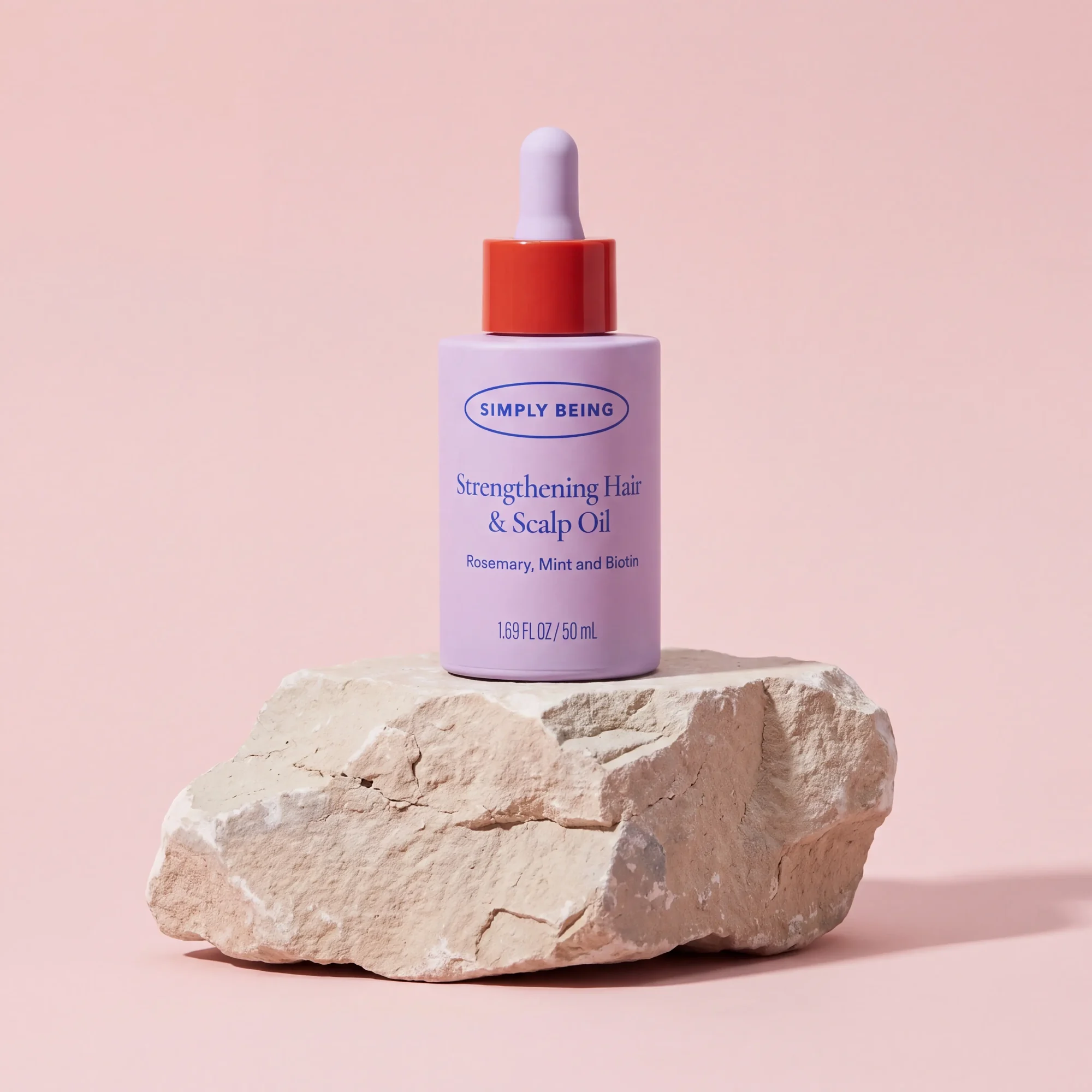
Fragrance and essential oils are the most common triggers for a reactive scalp. On a label they appear as Parfum or Fragrance, or as named essential oils such as Rosmarinus Officinalis (Rosemary) Leaf Oil or Mentha Arvensis Leaf Oil, sometimes followed by allergen components like Linalool or Limonene. Our products are scented with named essential oils rather than an undisclosed parfum, so you can see exactly what is in them. If your scalp reacts easily, patch test before first use.
This article is general information about cosmetic haircare and is not medical advice. If you have a scalp or skin condition, please speak to a doctor or dermatologist.
Mentioned in this article